
Intervention to Meet Needs
At Springhead Primary School, we understand that every child learns differently and may require varying levels of support throughout their educational journey.
Whilst Quality First Teaching remains the foundation of learning for all pupils, some children may benefit from additional interventions and targeted support to help them overcome barriers to learning, develop confidence and achieve their full potential.
Interventions are carefully selected to meet individual needs and may be delivered within the classroom, in small groups or, where appropriate, through individual support. The impact of interventions is monitored regularly to ensure they are effective and help pupils make progress towards their targets.
Cognition and Learning
Children may require support with:
- Reading
- Phonics
- Writing
- Spelling
- Number skills
- Working memory
- Concentration
- Organisation
- Independent learning skills
Support and interventions may include:
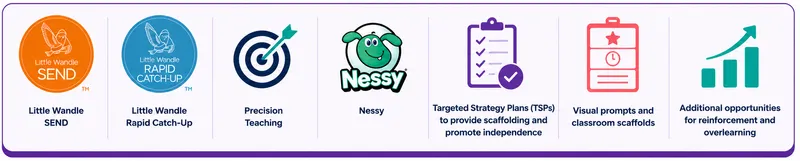
- Little Wandle SEND
- Little Wandle Rapid Catch-Up
- Precision Teaching
- Nessy
- Targeted Strategy Plans (TSPs) to provide scaffolding and promote independence
- Visual prompts and classroom scaffolds
- Additional opportunities for reinforcement and overlearning
Our aim is to develop confidence, independence and the skills needed for successful learning across the curriculum.
Communication and Interaction
Some children may need support to develop communication skills and social interaction.
Areas of support may include:
- Understanding language
- Using language effectively
- Understanding and following instructions
- Interacting socially
- Turn-taking
- Conversation skills
- Building and maintaining friendships
Support and interventions may include:
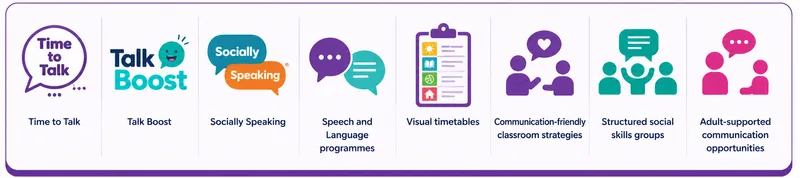
- Time to Talk
- Talk Boost
- Socially Speaking
- Speech and Language programmes
- Visual timetables
- Communication-friendly classroom strategies
- Structured social skills groups
- Adult-supported communication opportunities
We work closely with families and specialist professionals where appropriate to help children develop effective communication skills and positive relationships.
Social, Emotional and Mental Health (SEMH)
Some children may experience periods of anxiety, stress, low self-esteem, emotional distress or other circumstances that impact on their learning and wellbeing.
Support may be provided for pupils experiencing:
- Anxiety
- Bereavement
- Low self-esteem
- Friendship difficulties
- Emotional regulation difficulties
- Family circumstances that affect wellbeing
- Behaviour linked to emotional needs
Support and interventions may include:
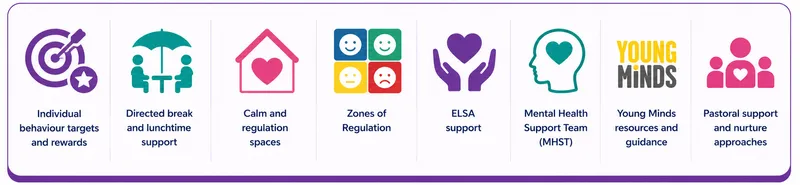
- Individual behaviour targets and rewards
- Directed break and lunchtime support
- Calm and regulation spaces
- Zones of Regulation
- ELSA support
- Mental Health Support Team (MHST)
- Young Minds resources and guidance
- Pastoral support and nurture approaches
Our aim is to help children develop emotional resilience, confidence and positive wellbeing so that they are ready to learn and succeed.
Sensory and/or Physical Needs
Some children may have sensory or physical needs relating to hearing, vision, physical development, motor skills, medical conditions or sensory processing differences.
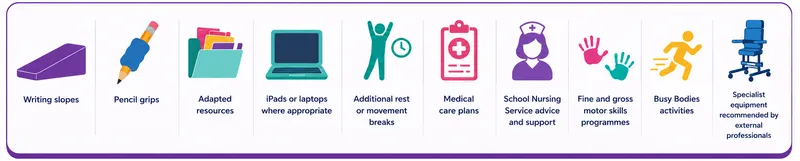
Many pupils access learning successfully through reasonable adjustments and inclusive classroom practice. Where additional support is needed, provision may include:
- Writing slopes
- Pencil grips
- Adapted resources
- iPads or laptops where appropriate
- Additional rest or movement breaks
- Medical care plans
- School Nursing Service advice and support
- Fine and gross motor skills programmes
- Busy Bodies activities
- Specialist equipment recommended by external professionals
Our aim is to ensure pupils can access learning, participate fully in school life and develop increasing independence.
Monitoring Impact
All interventions are monitored and reviewed to ensure they are meeting pupils' needs and supporting progress.
This may include:
- Baseline and exit assessments
- Observation of learning and engagement
- Feedback from pupils, parents and staff
- Review meetings
- Personalised Learning Plan (PLP) reviews
The information gathered helps us decide whether support should continue, be adapted or be replaced with alternative provision to ensure the best possible outcomes for every child.